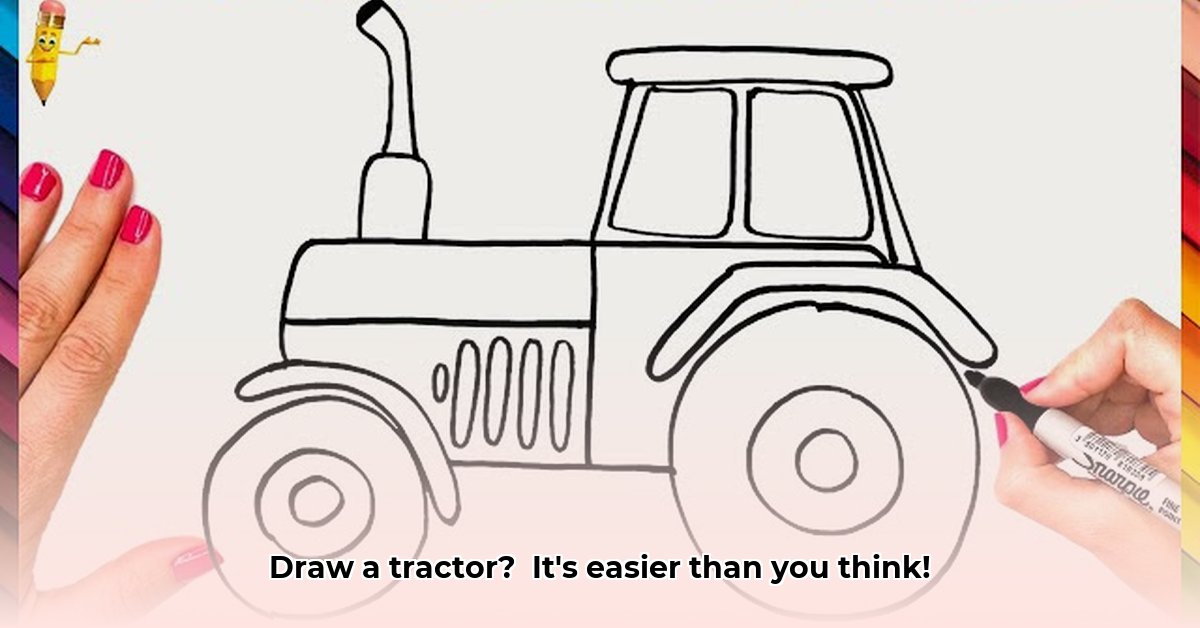
Tractor Easy Drawing: A Fun Guide for Beginners
Let's draw a tractor! It's easier than you think, and a whole lot of fun. This step-by-step guide will help you create your own farm friend on paper. Get ready to unleash your inner artist!
Step-by-Step Tractor Drawing Adventure
The Body: Start with a long rectangle. This forms the main body of your tractor. (Imagine a long, slightly rectangular box – that's the chassis!)
The Wheels: Add four circles; two larger ones at the rear and two smaller ones at the front. (These wheels are the tractor's mighty legs!)
The Cab: Draw a smaller rectangle on top of the main body. This is the driver's cab. (This is where the farmer sits and controls the machine.)
The Exhaust Pipe: Add a curved line extending upward from the back of the tractor. (That's where the fumes go – whoosh!)
The Details: Now for the fun part! Add details like a steering wheel inside the cab, a hitch at the back, and maybe even a farmer waving from the window! Get creative! (Consider adding a simple rectangular grill at the front, with a few lines inside, and a small circle for a headlight.)
(Imagine images or a short video demonstrating these steps here)
For more detailed tractor drawing instructions, see this helpful guide.
A Whirlwind History of Tractors: From Oxen to Innovation
Before tractors, farming relied heavily on animal power—horses, oxen, even water buffaloes! This was incredibly labor-intensive. The invention of steam-powered tractors in the 1800s marked a turning point, though these early machines were bulky and inefficient. The later development of internal combustion engine tractors truly revolutionized agriculture, dramatically increasing efficiency and yields. Did you know that the widespread adoption of tractors significantly reduced the amount of human labor needed for farming?
Tractor Types: A Diverse Fleet for Every Task
Tractors aren't one-size-fits-all. Compact tractors are perfect for smaller gardens or farms. Utility tractors offer more versatility, handling a wider range of tasks. Large agricultural tractors are powerhouses designed for massive fields. Each type boasts unique capabilities tailored to specific farming needs. What type of tractor would you need for a small vegetable patch versus a vast wheat field?
Tractors in Pop Culture: More Than Just Machines
Tractors have transcended their functional role to become ingrained in our culture. Many children's books and shows feature friendly, helper tractors as characters, showcasing their positive attributes and fostering a sense of familiarity and fondness. This positive portrayal contributes significantly to their image in our collective imagination. Can you name a children's book or show featuring a friendly tractor?
The Green Revolution: Minimizing the Environmental Impact of Tractors
Modern agriculture faces the challenge of minimizing the environmental footprint of tractors, while still ensuring enough food for a growing population. Fortunately, solutions are emerging. These include the adoption of alternative fuels (biodiesel, hydrogen, electric), the smart application of precision agriculture techniques to optimize fuel consumption and resource usage, and the continued development of advanced emission control technologies.
What role do you think government regulations play in encouraging the development and adoption of eco-friendly tractor technologies? The high upfront cost of these technologies remains a barrier, but government incentives and support can help accelerate the transition to a more sustainable agricultural future.
Key Takeaways:
- Alternative Fuels: Biodiesel, hydrogen, and electric tractors offer significant potential for reducing greenhouse gas emissions.
- Precision Agriculture: GPS-guided tractors and other technologies optimize resource use, minimizing fuel consumption, fertilizer, and pesticide application.
- Emission Control Technologies: Advanced systems like Selective Catalytic Reduction (SCR) and Diesel Particulate Filters (DPF) significantly reduce harmful emissions.
- Sustainable Practices: Responsible farming practices, such as crop rotation and no-till farming, complement technological advancements.
- Collaborative Efforts: Farmers, manufacturers, policymakers, and researchers must work together to create a more sustainable agricultural industry.
1https://qilumachinery.com/the-environmental-impact-of-farm-tractors/